français
 español
 português
 العربية
 한국의
한국의 Polski
 Tiếng Việt
 čeština
 български
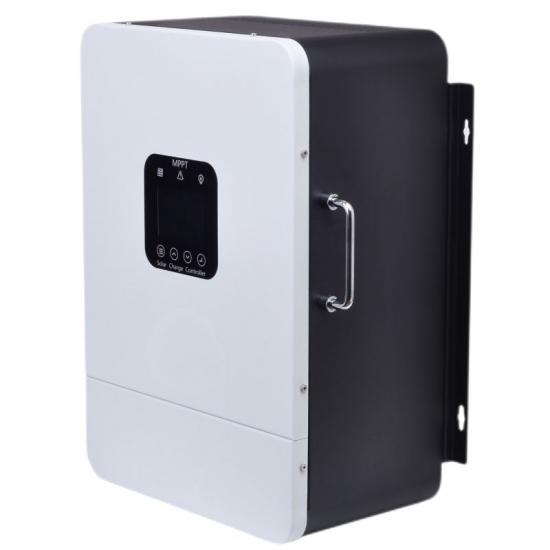
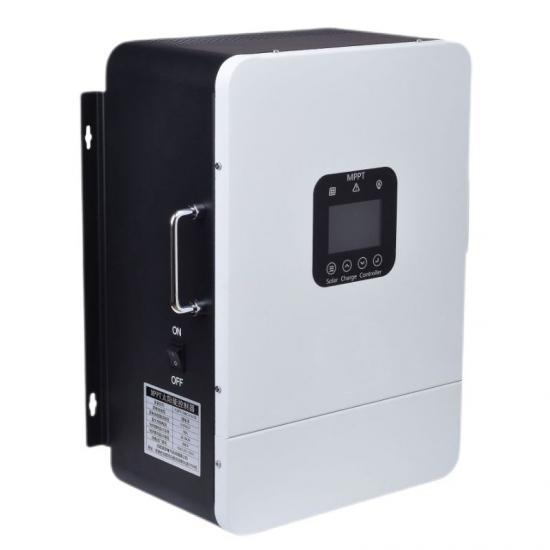
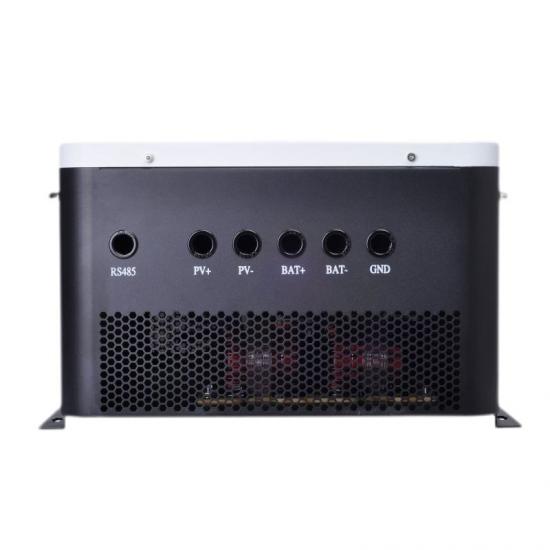
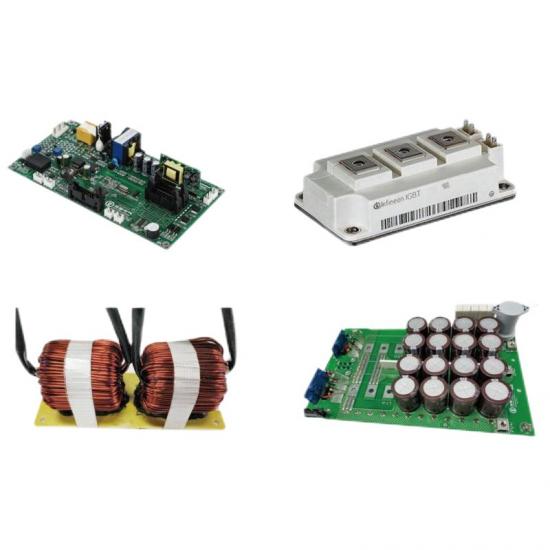
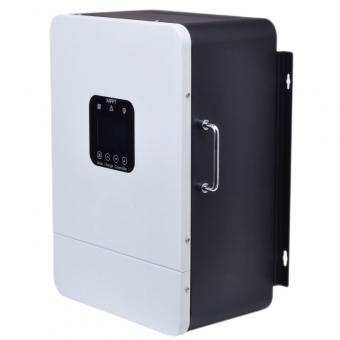
The MPPT solar charge controller uses multiphase synchronous rectification technology and common negative pole design, it chooses high speed processor and advanced MPPT algorithm to make it has high response speed, high reliability and other standards.
The advanced MPPT algorithm that the solar controller adopts can trace the maximum power point of PV arrays quickly in any situation to obtain the max. power from PV arrays. And the multiphase synchronous rectification technology can achieve high conversion efficiency in any charging environment and improve the utilization rate of solar power system greatly. According to the rated voltage of battery bank system, our factory can provide the MPPT solar charge controller from 192V to 540V which suitable to almost off grid solar power system
Payment:
TT/LC/PAYPAL/WESTUNIONProduct Origin:
ChinaShipping Port:
Shanghai/Ningbo/ShenzhenLead Time:
10daysProduct weight:
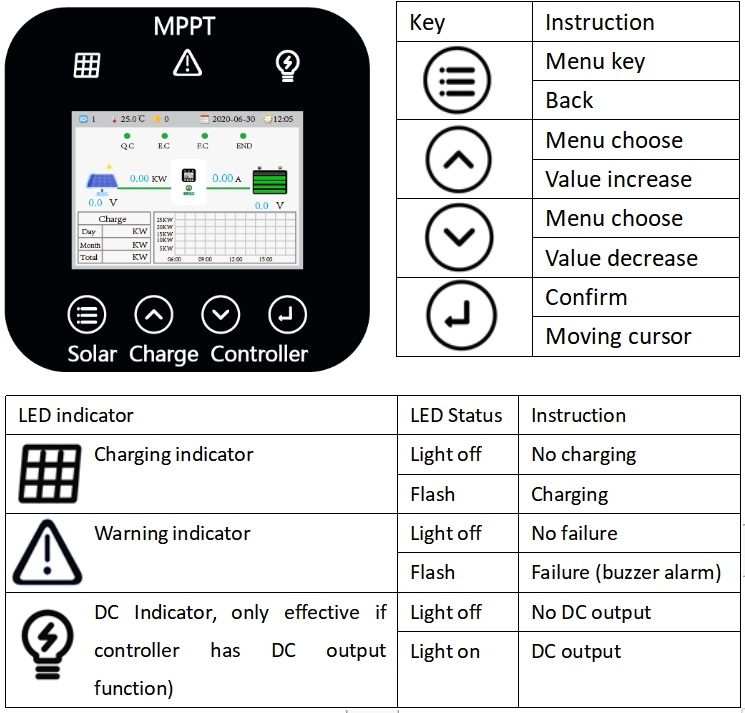
27kgLCD content
Feature
High speed and high performance 32-bit processor with excellent EMC design
Advanced MPPT tracking algorithm, the tracking efficiency more than 99%
High performance IGBT power module as electronic switch, there is no any mechanical switch, plus multiphase synchronous rectification technology, improves the stable greatly
Ultrafast maximum power point tracking speed to ensure tracking efficiency
Accurate identification and tracking of multi-peak maximum power points
With current-limiting charging function, charging current can be set, friendly and compatible with various capacity batteries.
Widely PV arrays’voltage input, this can save the cost of PV combiner box, wires and construction
Full enclosed duct design and high-speed fan for cooling makes the controller suitable for various harsh environment
It shows the ambient temperature. It also has automatic temperature compensation function and RTC real time function
The perfect battery protection function and multi-stage charging improves battery life
It has the statistical function of generating capacity which is very convenient for customers to view the daily, monthly and total charging capacity of the controller.
Complete menu display and operation, plus the humanized design of browsing interface, these makes the operation more easy
It can work with GEL. LEAD-ACID, LITHIUM and other type battery
Twice protection function to protect battery from damage when the power switch is down
Parameter:
| Rated system voltage | 192V | 240V | 288V | 300V | 360V | 384V | 420V | 480V | 540V |
| Rated Charging current | 50A 60A 70A 80A 100A | ||||||||
| Charging technology | MPPT (Max. Power Point Tracking) | ||||||||
| MPPT efficiency | >99.9% | ||||||||
| Max. input voltage | 750V | ||||||||
| Start charging voltage | Vbat+10V | ||||||||
| MPPT start voltage | Vbat+20V | ||||||||
| Charging method | Four stages: MPPT fast charging, equalize charging (constant voltage), float charging, end charging | ||||||||
| Over voltage disconnect (V) | 256 | 320 | 384 | 400 | 480 | 512 | 560 | 640 | 720 |
| Over voltage reconnect (V) | 240 | 300 | 360 | 375 | 450 | 480 | 525 | 600 | 675 |
| Equalize charging (V) | 230.4 | 288 | 345.6 | 360 | 432 | 460.8 | 504 | 576 | 648 |
| Equalize charging time | 120 minutes (default setting) | ||||||||
| Float charging (V) | 220.8 | 276 | 331.2 | 345 | 414 | 441.6 | 483 | 552 | 621 |
| Equalize charging recovery (V) | 211.2 | 264 | 316.8 | 330 | 396 | 422.4 | 462 | 528 | 594 |
| Over discharging warning (V) | 168 | 210 | 252 | 262.5 | 315 | 336 | 367.5 | 420 | 472.5 |
| Display | LCD+LED | ||||||||
| Language | English | ||||||||
| Connector type | TC series barrier terminal | ||||||||
| Altitude | <3000 meter, it should reduce power if the altitude more than 3000 meter | ||||||||
| Ambient temperature | -25~55 | ||||||||
| Protection level | IP32 (indoor) | ||||||||
| Dimension | 494*384*197mm | ||||||||
| Weight | 27KG | ||||||||
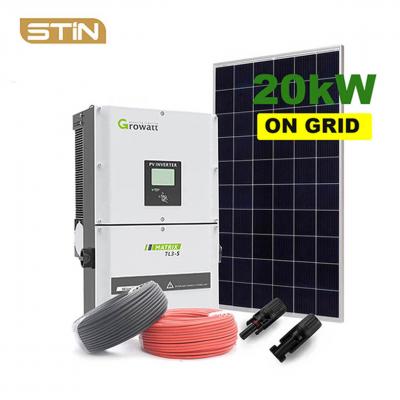
The solar photovoltaic power system connected to the public grid is called on-grid photovoltaic power generation system. The system structure includes solar panel arrays, DC/DC converters, DC/AC inverters, AC loads, transformers, and other components. Inverter power: 20kW AC output voltage: three phase Solar panel type: mono or poly
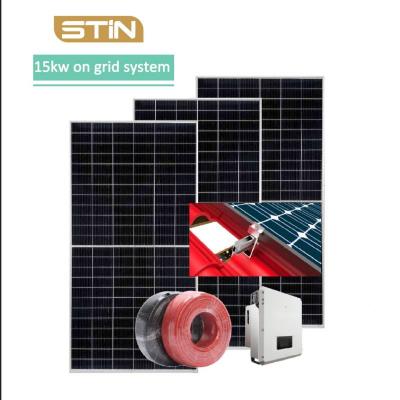
such on grid solar system is usually for home use. Solar panel will be installed on the roof, solar power will support loads first, the excess power will be sold to grid. If the grid does not allow feed in function, one limiter can be installed. The output of 15kW/20kW is three phase.
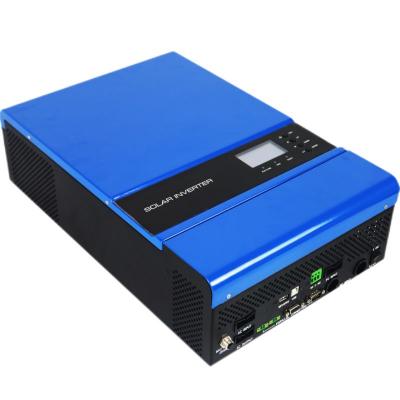
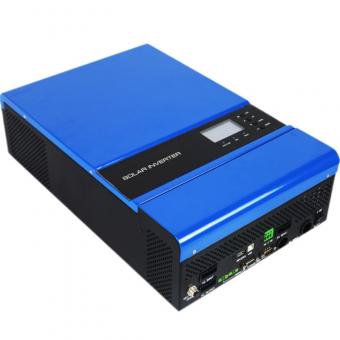
The 3kw solar inverter is integrated with MPPT solar charge controller inside. It can also connect to grid to take grid as backup when battery is over discharged. The output voltage is 120V, several pieces in parallel can get 120V/240V split phase. All of parameter such as working mode, charging current, over discharge voltage can be set as you wish.
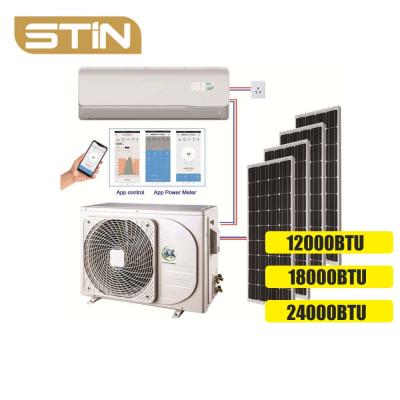
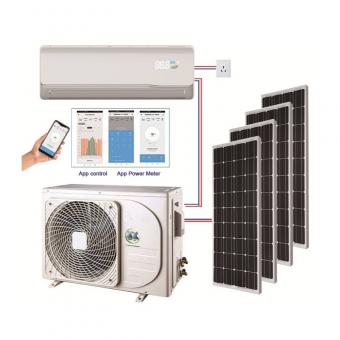
The solar hybrid AC/DC air conditioner can work without battery, it works with unstable solar panel DC power at day time. At night or rainy days it automatically get grid AC power. It's mainly used for school classroom, hospital, restaurant, shops, office… With APP monitor and control function through WIFI
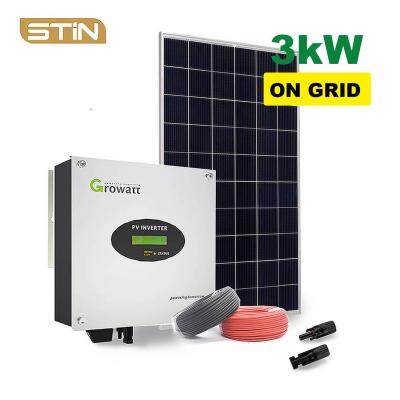
The on grid solar power system converts the solar energy into electrical energy, without the storage battery, and directly sends the electrical energy to the grid through the grid-connected inverter. Inverter power: 3kW AC output voltage: three phase Solar panel type: mono or poly
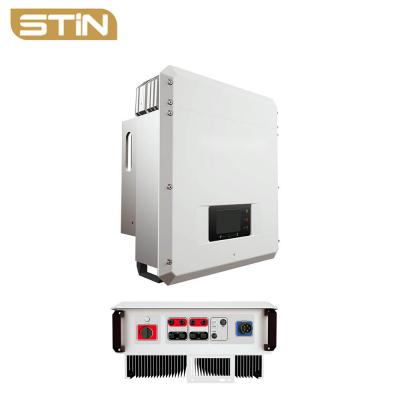
Characters Transformerless with three level topology Max efficiency up to 98.6% Dual MPPT inputs accommodating wide voltage range Compact structure design Complete protection function such as anti-islanding, short circuit, overload Easy installation and free maintenance WiFi or GPRS (optional) communication
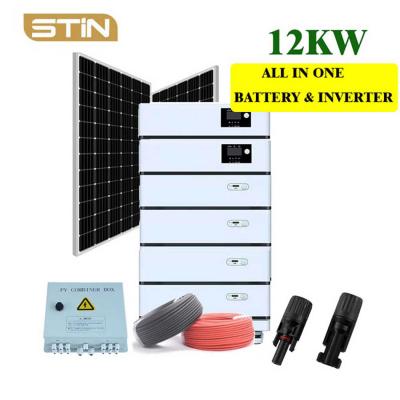
Off-grid or hybrid optional 6KW inverter, Max 3pcs in parallel Grade A battery cells, up to 6000+ cycles 5.5KWh battery, Max 12pcs in parallel Easy to install, combined freely BMS & battery capacity auto-sense WiFi/GPRS remote monitoring (optional)
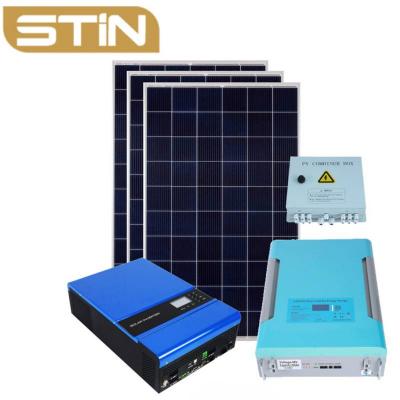
The 20kW off grid solar system is suitable for area without grid or grid is unstable. It can be compatible with generator to saving electricity bill and increase the power quality. Inverter power: 4pcs 5kw in parallel AC output voltage: AC220V/230V/240V or AC380V/400V/415V Battery voltage: DC48V Battery type: Gel battery or LiFePO4 battery Solar panel type: Mono or poly Compatible with grid and generator Monitor: WIFI or GPRS



 IPv6 network supported